Contextual Exegesis ยท 1,189 / 1,334 Chapters

Random Bible Chapter Generator

Read full chapters in their original literary context. Escape isolated proof-texting and discover the complete covenantal narrative flow of God's Word.

๐Ÿ“– Whole Chapter Reading Engine

Generate a Random Bible Chapter to Read

Overcome reading ruts and dive deeply into whole biblical chapters across Old Testament, New Testament, and Wisdom literature.

Poetry & Wisdom ยท Old Testament

Proverbs Chapter 16

Theme: Practical Godly Wisdom, Righteous Living, and Divine Providence

โœ๏ธ Author: Solomon ๐Ÿ“š Total Chapters: 31 โฑ๏ธ Reading Time: ~4 mins
"The lot is cast into the lap, but its every decision is from the LORD." โ€” Proverbs 16:33
๐Ÿ“– Read Full Chapter Online โ†—
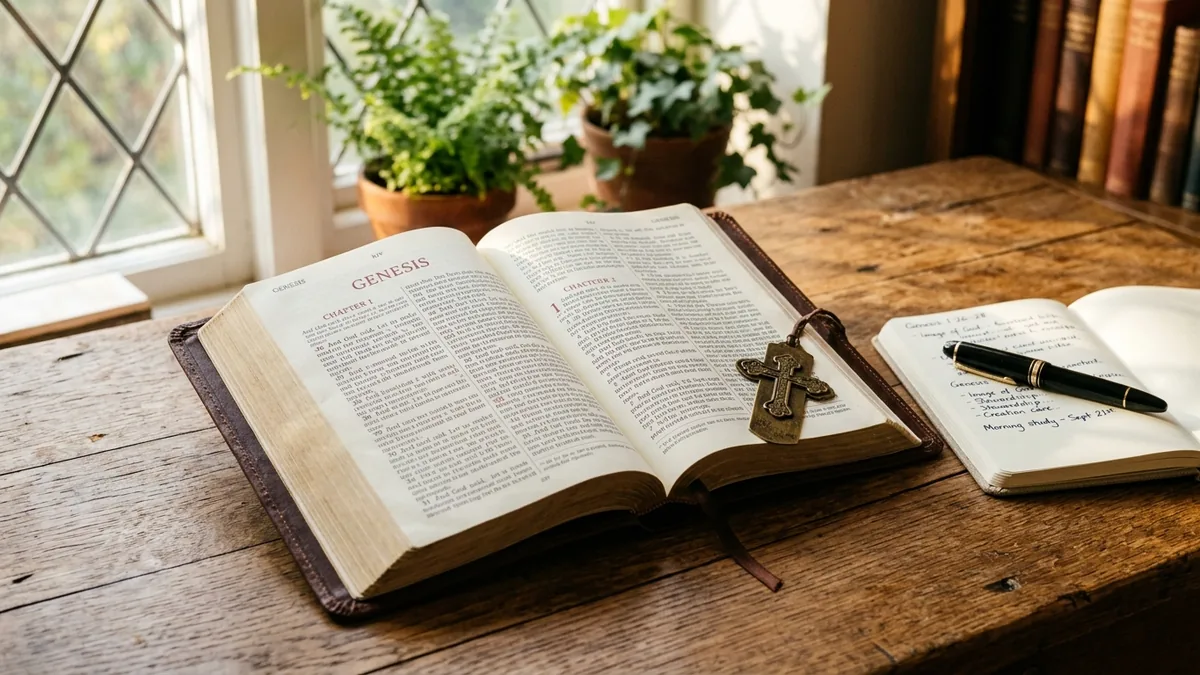
Open leather-bound study Bible on a warm oak desk beside a brass bookmark and notebook for random Bible chapter reading
โœจ AI Visual
Whole-chapter canonical reading preserves the literary context across all 1,189 Protestant and 1,334 Catholic chapters. Unoptimized original file

How Does a Random Bible Chapter Generator Prevent Proof-Texting?

A random Bible chapter generator selects an entire literary unit out of the 1,189 chapters in the 66-book Protestant canon (or 1,334 in the 73-book Catholic canon), preserving surrounding paragraphs, historical audience cues, and covenantal logic so readers never detach an isolated sentence from its authorial intent.

In biblical hermeneutics, reading a single verse in isolationโ€”often called proof-textingโ€”frequently distorts the inspired author's argument. The original Hebrew scrolls of the Tanakh and the Greek papyri of the New Testament were composed as continuous narratives, legal covenants, prophetic oracles, and pastoral epistles without modern verse breaks. When a believer rolls a complete chapter in Romans, Isaiah, or the Gospel of John, the surrounding paragraph structure clarifies who is speaking, which covenant community is addressed, and whether a statement is descriptive of historical events or prescriptive for Christian doctrine.

For readers who want to inspect individual Greek or Hebrew lemmas after finishing a chapter, you can compare individual verses across six translations in our side-by-side randomizer, or compare the 66-book and 73-book biblical canons to see how Deuterocanonical chapters fit into Second Temple Jewish history.

Historical Origins of Biblical Chapter and Verse Divisions

Understanding how the Bible was divided into chapters helps modern readers treat chapter boundaries as helpful reference signposts rather than rigid theological walls:

  • Ancient Hebrew Parashot and Sedarim (Pre-Masoretic Era): Early Jewish scribes divided the Torah into 54 weekly liturgical readings (Parashot) for the annual Babylonian synagogue cycle and 154 smaller sections (Sedarim) for the triennial Palestinian cycle, marking open (Petuchah) and closed (Setumah) paragraph intervals directly in the scrolls.
  • Stephen Langton's Paris Chapters (c. 1205 CE): While lecturing at the University of Paris before becoming Archbishop of Canterbury, Stephen Langton standardized the chapter divisions in the Latin Vulgate so scholars and commentators could locate passages uniformly across manuscripts. Jewish scholar Solomon ben Ishmael adopted Langton's chapter numbers into Hebrew manuscripts around 1330 CE.
  • Robert Estienne's Numbered Verses (1551โ€“1555 CE): Working between Paris and Geneva, French printer Robert Estienne (Stephanus) combined Rabbi Isaac Nathan ben Kalonymus's 1448 Hebrew verse concordance with his own numbered Greek New Testament verses in 1551. The 1560 Geneva Bible became the first English translation to print both Langton's chapters and Estienne's verses together.

Canonical Chapter Distribution Across Biblical Genres

Each literary division of Scripture carries its own reading pace and interpretive rules. An historical narrative in 1 Samuel reads rapidly at 180 to 220 words per minute, whereas dense Pauline theology in Ephesians or symbolic apocalyptic visions in Daniel require slower, meditative cross-referencing.

Canonical Chapter Counts, Word Density & Study Duration by Biblical Division
Biblical Division Books Chapters Avg. Reading Time Primary Hermeneutical Lens
Pentateuch (Torah) 5 (Genโ€“Deut) 187 4โ€“6 min / ch Creation, Abrahamic & Mosaic covenant foundations
Historical Books (OT) 12 Protestant / 16 Catholic 249 / 339 5โ€“7 min / ch Theological history of Israel's monarchy, exile, and return
Wisdom & Poetry 5 Protestant / 7 Catholic 243 / 313 2โ€“4 min / ch Hebrew parallelism, lament, praise, and proverbial wisdom
Major & Minor Prophets 17 Protestant / 18 Catholic 250 / 256 4โ€“6 min / ch Covenant lawsuit oracles, exile warnings, Messianic hope
Gospels & Acts 5 (Mattโ€“Acts) 117 5โ€“8 min / ch Incarnation, Kingdom parables, passion, resurrection, early Church
Pauline & General Epistles 21 (Romโ€“Jude) 121 3โ€“5 min / ch Apostolic doctrine, ecclesiology, sanctification, pastoral ethics
Apocalyptic Literature 1 (Revelation) 22 4โ€“6 min / ch Old Testament prophetic allusion, cosmic victory of Christ

A 4-Step Hermeneutical Method for Daily Chapter Study

When you roll a chapter using the interactive engine above, apply the classic Observation, Interpretation, Correlation, and Application framework practiced in seminary exegesis:

  1. 1. Check the Surrounding Literary Boundary: Read the final three verses of the preceding chapter and the opening two verses of the following chapter. Because Langton's 13th-century divisions occasionally split a single discourse (for example, Isaiah 52:13โ€“53:12 or 1 Corinthians 12:31โ€“13:13), checking the seam restores the unbroken argument.
  2. 2. Identify the Genre and Historical Occasion: Note the literary category badge displayed in our chapter generatorโ€”whether Hebrew poetry, prophetic oracle, Gospel narrative, or apostolic letter. Never read a descriptive historical failure in Judges as a normative moral command, or treat poetic hyperbole in the Psalms as a wooden legal statute.
  3. 3. Trace Repetition and Contrast Connectors: Look for repeated theological keywords (such as righteousness in Romans 3, abide in John 15, or by faith in Hebrews 11) and logical conjunctions (therefore, but God, for this reason) that reveal the hinge of the chapter.
  4. 4. Record Citations and Prayer Responses: If you are preparing a sermon manuscript, seminary paper, or small-group study handout, format academic chapter citations in MLA or SBL with one click, or roll the interactive 3D Scripture Dice to pair your chapter reading with a memorized key verse.
Canonical Directory

Explore Chapters by Book of the Bible

Quick jump into any of the 66 canonical Protestant books or 7 Catholic Deuterocanonical books.

Old 50 Chs

Genesis

Pentateuch / Law

Origins, Creation, Fall, and Covenant Patriarchs

Old 40 Chs

Exodus

Pentateuch / Law

Deliverance from Slavery, Passover, and the Ten Commandments

Old 150 Chs

Psalms

Poetry & Wisdom

Praise, Worship, Lament, and Messianic Prophecies

Old 31 Chs

Proverbs

Poetry & Wisdom

Practical Godly Wisdom, Righteous Living, and Divine Providence

Old 66 Chs

Isaiah

Major Prophets

Holiness of God, Judgment, and the Suffering Servant Messiah

Old 52 Chs

Jeremiah

Major Prophets

Repentance, Exile, and the Promise of a New Covenant

New 28 Chs

Matthew

Gospels

Jesus as the Promised King, Messiah, and Fulfillments of Law

New 16 Chs

Mark

Gospels

Jesus as the Servant of the Lord and Mighty Wonderworker

New 24 Chs

Luke

Gospels

Jesus as the Compassionate Son of Man and Savior of All

New 21 Chs

John

Gospels

The Eternal Word, Deity of Christ, and Everlasting Life

New 28 Chs

Acts of the Apostles

Church History

Holy Spirit's Outpouring, Casting Lots for Matthias, and Global Gospel Expansion

New 16 Chs

Romans

Pauline Epistles

Justification by Faith, Unbreakable Love of God, and Sanctification

New 22 Chs

Revelation

Apocalyptic

Christ's Victorious Return, New Heavens, New Earth, and Eternal Hope

Deuterocanonical (Catholic Canon) 14 Chs

Tobit

Deuterocanonical

Faithfulness under trial, angel Raphael's guidance, and divine providence

Deuterocanonical (Catholic Canon) 19 Chs

Wisdom of Solomon

Deuterocanonical

Immortality, personification of Divine Wisdom, and justice

Deuterocanonical (Catholic Canon) 51 Chs

Sirach (Ecclesiasticus)

Deuterocanonical

Moral wisdom, ethical conduct, and the fear of the Lord

Canonical Study FAQ

Frequently Asked Questions About Random Bible Chapters

How many chapters are in the entire Bible? โ–พ

The 66-book Protestant Bible contains 1,189 chapters in totalโ€”929 chapters in the Old Testament and 260 chapters in the New Testament. If you read exactly 3.25 chapters per day, you will complete the entire Protestant canon in one calendar year. The 73-book Catholic canon contains 1,334 chapters including Tobit, Judith, 1โ€“2 Maccabees, Wisdom, Sirach, Baruch, and the Greek additions to Esther and Daniel.

What is the shortest, longest, and middle chapter of the Bible? โ–พ

Psalm 117 is both the shortest chapter in the Bible (only 2 verses) and the exact mathematical middle chapter of the 1,189-chapter Protestant Bible (with 594 chapters before it from Genesis 1 to Psalm 116, and 594 chapters after it from Psalm 118 to Revelation 22). Psalm 119 is the longest chapter in Scripture with 176 verses.

Who divided the Bible into chapters and verses? โ–พ

Archbishop Stephen Langton divided the Latin Vulgate into the modern chapter system around 1205 CE at the University of Paris. French scholar-printer Robert Estienne (Stephanus) added the New Testament verse numbers in 1551, combining them with Rabbi Isaac Nathan's 15th-century Hebrew Old Testament verse divisions.

Make Bible Answer Team a Preferred Source

Keep scripture answers highlighted in Google Search and AI Overviews.

Add on Google
Preferred Source added
URL copied to clipboard!